
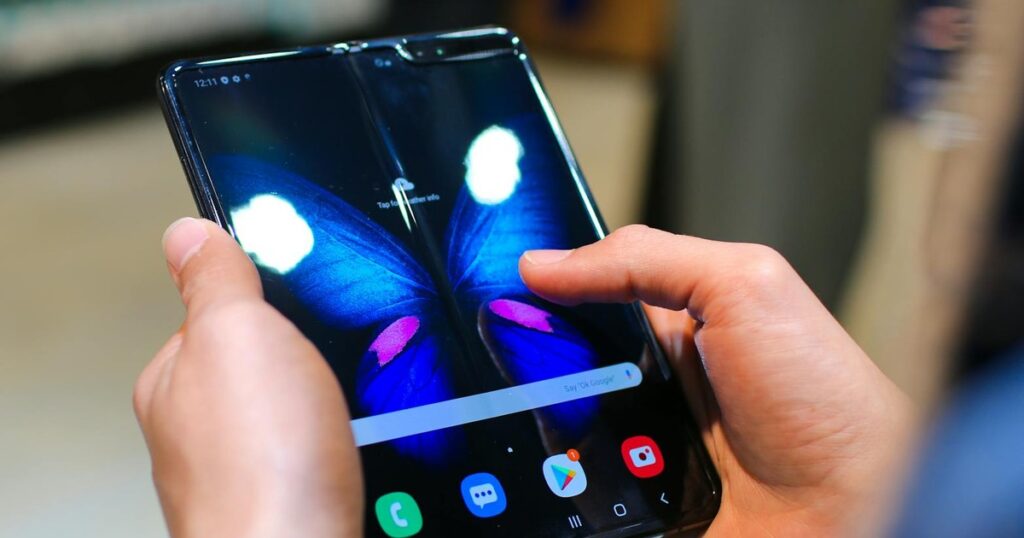
Samsung has confirmed it will stop selling the Galaxy Z TriFold, a high-end foldable phone with two hinges that transforms from a phone to a 10-inch tablet. The device launched in South Korea in December 2025 and in the US in January 2026, but sales are now being wound down globally as inventory clears. This decision comes just three months after its release, marking one of the shortest product cycles in Samsung’s recent history.
According to Bloomberg, Samsung will begin phasing out the Galaxy Z TriFold in its home market of South Korea first, with other regions like the US following suit. The company has not provided an official explanation for discontinuing the device, but industry analysis points to financial pressures rather than lack of consumer interest.
Despite its steep $2,899 price tag, the Galaxy Z TriFold reportedly sold every unit Samsung could produce. The company’s website indicated restocks were planned until recently, and secondary markets saw buyers paying above the manufacturer’s suggested retail price. This suggests demand was robust, contradicting any assumption that poor sales drove the discontinuation.
The primary factor behind Samsung’s move appears to be escalating costs for key components. Memory and storage prices have risen sharply, and the Galaxy Z TriFold’s base model includes 16GB of RAM and 512GB of storage—generous specifications that contribute significantly to its bill of materials. Even at nearly $3,000, the device likely yielded minimal or negative margins for Samsung, making it economically unviable.
Raising the price further to offset these costs would have been a risky strategy, potentially damaging Samsung’s brand image in a competitive market. Instead, the company opted to discontinue the TriFold, reallocating resources to more profitable products like the newly released Galaxy S26 Ultra, which retails for $1,300 and is selling well.
The Galaxy Z TriFold was engineered as a prestige device, showcasing Samsung’s ability to create a foldable with two hinges that expands into a tablet-sized screen. It was never intended for mass production, targeting a niche audience willing to pay a premium for cutting-edge technology. With limited volumes, the financial impact of high component costs became untenable, leading to its early exit from the market.
This discontinuation highlights the trade-offs in the foldable phone segment, where advanced engineering often clashes with cost constraints. For Samsung, focusing on more mainstream devices like the Galaxy S26 Ultra, which offers strong performance at a lower price point, represents a pragmatic shift in resource allocation amid volatile component pricing.