
In a groundbreaking study published today in Nature, human scientists have once again demonstrated their superiority over artificial intelligence when it comes to tackling complex, multi-step research tasks. The study tested cutting-edge AI models, including GPT-5, Claude Opus 4.7, and Gemini Ultra 2, on a suite of 120 research-grade problems. These problems spanned diverse fields such as organic chemistry synthesis, condensed matter physics derivations, and bioinformatics pipeline design. The results were striking: humans scored an average of 78% on these tasks, while the best AI agent, Claude Opus 4.7 with extended thinking capabilities, managed only 41%. This gap in performance was most pronounced on tasks requiring creative hypothesis generation, highlighting a critical limitation of AI in creative problem-solving. The study’s authors argue that current benchmarks, which often suggest near-parity between humans and AI, are misleading, as they focus on narrow, well-defined problems rather than open-ended inquiry.
Context
The rapid evolution of artificial intelligence has seen AI systems make significant strides in a variety of fields, from language processing to autonomous driving. However, when it comes to complex research tasks, the capabilities of AI remain limited. This is particularly true in domains that require not just computational prowess, but also creativity, intuition, and the ability to synthesize disparate pieces of information. Benchmarks have been a traditional method of measuring AI performance, yet they often consist of tasks that are too simplistic or too narrowly defined to truly reflect the complexities of real-world scientific inquiry.
In recent years, the AI community has seen impressive developments in model architectures and training paradigms, which have pushed the boundaries of what AI can achieve. For instance, models like GPT-5 and Gemini Ultra 2 have demonstrated remarkable language understanding and generation capabilities. Likewise, Claude Opus 4.7 has shown enhanced problem-solving abilities with its extended thinking features. Despite their achievements in controlled environments, these models often fall short when applied to tasks that demand a more nuanced understanding of scientific problems.
The study published in Nature serves as a timely reminder of the gap between AI’s perceived capabilities, as suggested by benchmark scores, and its actual performance in complex problem-solving scenarios. As AI continues to evolve, it is crucial to reassess how we measure success in this field, particularly in research tasks that are inherently complex and open-ended. The findings highlight the need for more comprehensive and realistic benchmarks that better capture the essence of scientific inquiry, rather than focusing solely on narrow tasks that fail to reflect the intricate challenges of real-world research.
What Happened
The study conducted by a team from the University of Cambridge and Stanford University set out to evaluate the performance of advanced AI models on a range of challenging research tasks. The AI models were assessed using 120 research-grade problems, divided into categories such as organic chemistry, condensed matter physics, and bioinformatics. These problems were carefully selected to cover a range of difficulty levels, with some requiring straightforward problem solving and others demanding creative hypothesis generation.
Among the AI models tested, Claude Opus 4.7 emerged as the best performer, achieving a score of 41%. In contrast, human scientists achieved an average score of 78%, showcasing a significant performance gap. GPT-5 and Gemini Ultra 2 also participated in the evaluation but lagged behind Claude Opus 4.7 in their scores. The research tasks were designed to mimic real-world scenarios that scientists encounter in their work, focusing on the ability to generate novel hypotheses and integrate complex data streams into coherent solutions.

The study’s results demonstrated that while AI models can excel in environments with clearly defined parameters, their ability to operate in less structured settings remains limited. The largest discrepancies were observed in tasks requiring creative thinking and hypothesis generation, where AI models struggled to produce innovative solutions. The authors noted that these findings call into question the reliability of current benchmarks, which may not accurately reflect the challenges faced in practical research settings. They advocate for the development of new benchmarks that incorporate aspects of creativity and open-ended problem-solving.
Why It Matters
The implications of this study extend far beyond the academic sphere, impacting the broader fields of artificial intelligence and scientific research. As AI continues to play an increasingly important role in various industries, understanding its limitations is crucial for setting realistic expectations and guiding future developments. The study underscores the necessity of developing AI systems capable of creative and critical thinking, areas where human scientists currently excel.
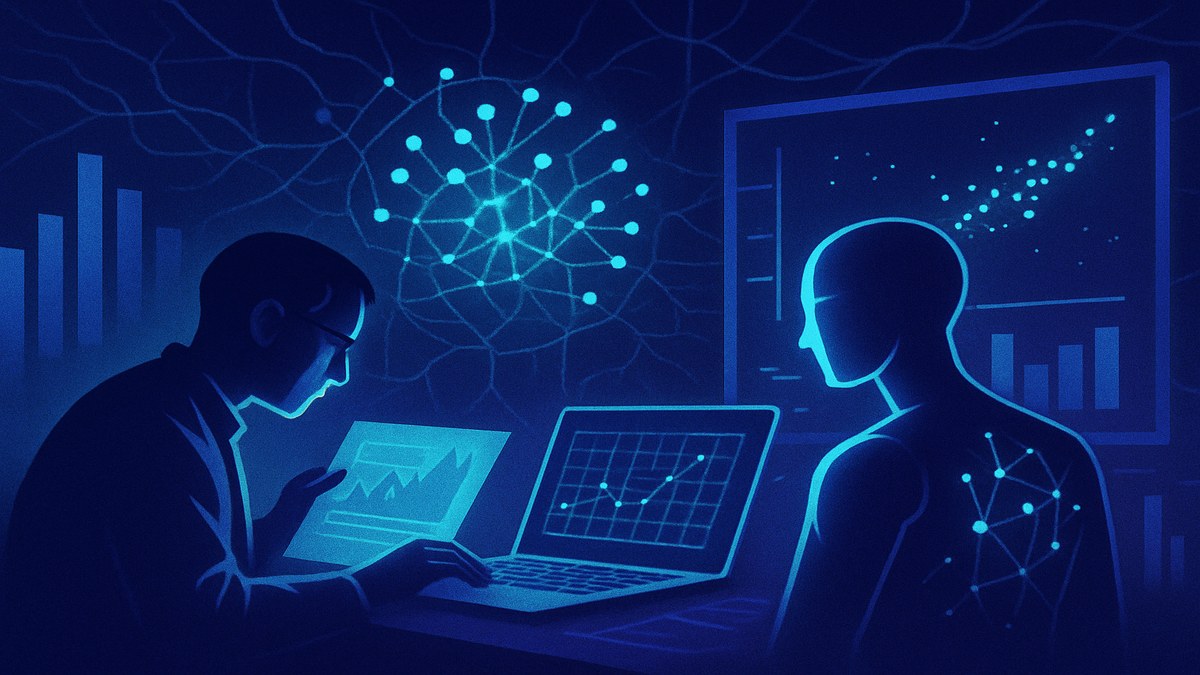
For researchers and practitioners, the findings highlight the importance of collaboration between human experts and AI systems. While AI can automate routine tasks and assist in data analysis, it is the human element that drives innovation and the generation of new ideas. The study suggests that AI should be viewed as a tool to augment, rather than replace, human expertise in complex research environments.
Furthermore, the study raises important questions about the design and implementation of AI benchmarks. As the field advances, there is a growing need to develop evaluation methods that accurately reflect the intricacies of real-world problems. By focusing on open-ended, creative tasks, researchers can better assess the capabilities of AI systems and identify areas for improvement. This approach will ensure that AI continues to evolve in a manner that complements and enhances human scientific endeavors.
How We Approached This
At Model Lab Daily, our focus is on delivering in-depth analysis of advancements in artificial intelligence and machine learning research. To achieve this, we prioritized a comprehensive review of the study published in Nature, ensuring our coverage provided a detailed account of the methodologies and findings presented by the researchers. Our editorial team examined the performance of the AI models in context, emphasizing the significance of the study’s results to both the AI research community and broader scientific discourse.
We also considered the study within the framework of current AI benchmarks, exploring how these results challenge existing perceptions of AI capabilities. By taking a pragmatic approach, we aimed to offer insights that are relevant to researchers, industry professionals, and policymakers. We focused on the implications of the study’s findings, highlighting the importance of developing new benchmarks that more accurately capture the complexities of scientific research tasks.
Frequently Asked Questions
What AI models were tested in the study?
The study evaluated several advanced AI models, including GPT-5, Claude Opus 4.7, and Gemini Ultra 2. These models were tested on 120 research-grade problems spanning fields like organic chemistry, condensed matter physics, and bioinformatics. Claude Opus 4.7 emerged as the top performer among the AI models.
How did human scientists perform compared to AI agents?
Human scientists significantly outperformed AI agents in the study, scoring an average of 78% on the research tasks. In contrast, the best AI model, Claude Opus 4.7, achieved a score of 41%. The performance gap was especially notable on tasks requiring creative hypothesis generation.
What does this mean for the future of AI in research?
The study suggests that while AI systems are valuable tools for automating routine tasks, they currently lack the creative and critical thinking abilities of human scientists. This underscores the importance of developing AI systems that complement human expertise and contribute to innovative scientific research.
Looking ahead, the findings of this study offer critical insights into the future of AI in research. As AI technology continues to advance, it is essential to recognize its current limitations and work towards developing systems that enhance human capabilities rather than replace them. The study serves as a call to action for researchers, developers, and policymakers to focus on creating AI systems that are capable of addressing the complexities of real-world scientific challenges. Ultimately, the goal should be to foster a collaborative environment where AI and human scientists work together to drive innovation and discovery.